A good resume skills section gives an employer a compact view of the tools, methods, and practical abilities you can bring to the job. Include skills you can use and explain, prioritize those the posting asks for, and group them when it makes the section easier to scan.
For a customer support role, that might look like this:
Customer support: Subscription billing, account-access troubleshooting, email and chat support
Tools: Zendesk
Documentation: Help-center articles, escalation notes
That is more useful than “communication, teamwork, computer skills.” It tells the reader what kind of work you can do.
You can build your section using the examples below, or use Reztune's AI resume tailoring to select and present relevant skills alongside your experience and summary for each posting.
Six resume skills section examples for different roles
The backgrounds, job requirements, and resume sections below are illustrative. They show how to turn stated experience into a skills section; they are not customer resumes or captured Reztune outputs. Borrow the structure and include only the abilities you actually have.
1. Customer support specialist
Background: This candidate resolves subscription billing and login problems through email and chat in Zendesk. They write help-center articles and document unresolved issues before escalating them to engineering.
Target role: A software support team needs billing support, troubleshooting, and clear written handoffs.
Customer support: Subscription billing, account-access troubleshooting, email and chat support
Support platform: Zendesk
Documentation: Help-center writing, engineering escalation notes
The section names the problems, channels, and platform. “Technical support” alone would leave the employer guessing about the candidate's experience. Salesforce and phone support stay out because neither appears in this background.
2. Administrative assistant
Background: This candidate manages shared Outlook calendars, schedules meetings, prepares agendas and minutes in Word, and records supplier invoices in Excel. They organize travel bookings and expense receipts.
Target role: An office needs meeting coordination, accurate records, and travel support.
Office coordination: Calendar management, meeting scheduling, travel arrangements
Records and documents: Meeting agendas and minutes, invoice tracking, expense receipt organization
Tools: Microsoft Outlook, Word, Excel
This makes “organized” visible through specific work. Invoice tracking belongs here; bookkeeping or financial analysis would imply responsibilities the background does not establish. For Excel, the candidate should be ready to explain how they use it rather than adopt an unsupported “advanced” label.
3. Junior data analyst — technical skills example
Background: In a university project, this candidate queried a retail dataset with SQL joins and aggregations, cleaned missing and duplicate records in Python with pandas, and built a Tableau dashboard. In a campus job, they summarized survey responses using Excel PivotTables.
Target role: A junior reporting position asks for SQL, data cleaning, dashboards, and spreadsheets.
Querying: SQL joins and aggregations
Data preparation: Python (pandas), missing-value checks, duplicate removal
Reporting: Tableau dashboards, Excel PivotTables
Project work can support a skills section even before a first analyst job. The projects and experience sections should identify where these abilities were used. There is no need to add machine learning, cloud platforms, or production data engineering to make this example look more technical.
4. Backend software engineer — technical skills example
Background: This candidate builds REST APIs in Java and Spring Boot, writes PostgreSQL queries, tests services with JUnit, packages applications with Docker, and reviews code through Git pull requests. Their team uses AWS, but another team handles its infrastructure.
Target role: A backend position emphasizes API development, relational databases, and automated testing.
Backend development: Java, Spring Boot, REST APIs
Databases: PostgreSQL, SQL
Testing and delivery: JUnit, Docker, Git
Grouping helps the reader find the relevant stack quickly. AWS is omitted: working on a product hosted there does not, by itself, establish hands-on cloud skills. If the candidate has deployed or maintained AWS services personally, those additional facts could change the section.
5. Digital marketing specialist
Background: This candidate builds email campaigns and audience segments in Mailchimp, publishes website content in WordPress, and uses Google Analytics 4 to report website traffic and campaign conversions. They write email copy and test subject lines.
Target role: A marketing team needs email execution, content publishing, and performance reporting.
Email marketing: Mailchimp, audience segmentation, subject-line testing, email copywriting
Content: WordPress publishing
Reporting: Google Analytics 4, website traffic and campaign conversion reporting
Specific platforms make this easier to assess than “digital marketing tools.” HubSpot, paid advertising, and search engine optimization should not appear merely because they are common marketing skills. This candidate has supplied no evidence for them.
6. Retail supervisor moving into operations coordination
Background: This candidate prepares staff schedules, maintains stock counts in Excel, coordinates supplier deliveries, trains new starters on opening procedures, and resolves customer complaints. They have not managed a warehouse or used an enterprise resource planning system.
Target role: An operations coordinator opening emphasizes scheduling, inventory records, and supplier communication.
Coordination: Staff scheduling, supplier delivery coordination
Inventory: Stock counts, Excel inventory records
Team support: New-starter training, customer complaint resolution
These are transferable skills with a clear basis in retail work. The experience section should retain that setting and explain the responsibilities. “Warehouse management” and an unfamiliar software platform would exaggerate the transition instead of helping the employer understand it.
How to choose what goes in your skills section
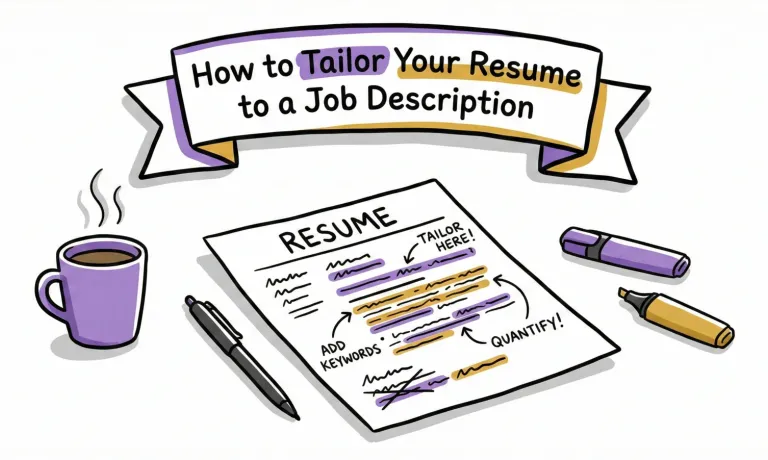
Start with the actual posting. Two employers can use the same job title while needing different tools and responsibilities. A list copied from another person's resume cannot make those decisions for you.
Match the requirement to something you have done
For each important skill, ask: Where have I used this, and what could I explain about it in an interview? Paid work, projects, study, and volunteering can all provide evidence. Be clear about the setting and depth of your experience.
Use three decisions:
- You have used it: name the skill precisely and include it when it matters to the role.
- You have related experience: describe the ability you actually have. Mailchimp experience does not become HubSpot experience because the posting asks for HubSpot.
- You have not done it: leave it out. A missing qualification is useful information about the fit, not an invitation to add another keyword.
Read requirements in context. A tool mentioned once as essential can matter more than a phrase repeated throughout the posting. Our guide to finding keywords in a job description explains how to identify those priorities.
Choose specific skills over broad labels
“Computer skills” could mean anything from sending email to building software. “Excel PivotTables” gives the reader something concrete to evaluate. Likewise, “supplier delivery coordination” says more about an operations candidate than “organizational skills.”
Use the employer's terminology when it accurately describes your experience. Keep recognizable tool names and explain unfamiliar abbreviations where necessary. Do not collect near-identical phrases just to repeat a keyword.
Show soft skills through the work
Communication, teamwork, leadership, and problem-solving matter, but listing them alone gives an employer little evidence. Show them in your experience bullets, and use concrete activities in the skills section where they help describe the role.
The retail supervisor above could support “new-starter training” with this experience bullet:
Trained new starters on store opening procedures and coordinated their initial shifts through the staff schedule.
That shows how the candidate helps colleagues get started. “Inspirational leader with outstanding people skills” would ask the reader to accept a judgment without seeing the work.
Group a longer list; keep a short one simple
Use a clear heading such as Skills or Technical Skills. For a short list, one or two lines may be enough. For a broader technical background, use labels such as Languages, Databases, and Testing so the employer can locate a particular capability quickly.
Prefer plain text to rating bars or stars. “Python: four out of five” gives no clear account of what you can do. “Python (pandas): data cleaning” communicates scope.
Place the section where it helps the reader assess your fit. Technical candidates may benefit from a compact skills section near the top; experienced candidates with strong relevant achievements may lead with experience. Keep enough space to demonstrate the listed skills in the rest of the resume.
One candidate, two jobs: how the skills section changes
Consider Morgan, an operations assistant with this background:
- Coordinates staff schedules and supplier deliveries.
- Tracks stock levels and delivery discrepancies in Excel.
- Uses Excel PivotTables to summarize weekly stock discrepancies.
- Writes procedure checklists in Word.
- Maintains a shared Outlook calendar and schedules team meetings.
- Has never used SAP or Power BI.
Morgan's current skills line reads:
Microsoft Office, communication, teamwork, organization, problem-solving.
The problem is that the employer cannot see the work behind those labels. Here is how the same experience could answer two different postings.
Job A: operations coordinator focused on scheduling
Posting priorities: Staff scheduling, supplier communication, delivery coordination, and accurate inventory records. SAP is preferred.
Coordination: Staff scheduling, supplier delivery coordination, Outlook calendars
Inventory: Stock tracking, delivery discrepancy records
Tools: Excel, Outlook
Scheduling and deliveries come first because they are central to this job. PivotTables and procedure writing remain part of Morgan's background, but they do not need separate emphasis in this compact section. SAP stays out.
A supporting experience bullet could read:
Coordinated staff schedules and supplier deliveries, maintaining stock and delivery discrepancy records in Excel.
Job B: operations coordinator focused on reporting
Posting priorities: Weekly inventory reporting, Excel PivotTables, procedure documentation, and team coordination. Power BI is preferred.
Reporting: Excel PivotTables, weekly stock discrepancy summaries
Documentation: Procedure checklists, Microsoft Word
Coordination: Team meeting scheduling, Outlook calendars
The second version brings reporting and documentation forward. It does not turn Morgan into a data analyst or claim Power BI experience. A supporting bullet could read:
Summarized weekly stock discrepancies using Excel PivotTables and wrote procedure checklists in Word.
Both sections describe the same person. The selection and order change because the employer's priorities change. Each omitted preferred tool remains a gap; Morgan can still assess whether the core fit makes applying worthwhile.
Your summary should reflect the same priorities. The resume summary examples guide shows how to carry this choice into the opening paragraph without repeating your skills list.
Tailor your skills with Reztune
The work in Morgan's example is more than editing a list. You have to understand the posting, identify supporting experience, select accurate terminology, and make the skills, bullets, and summary agree. Repeating that for every application takes time.
Reztune performs that comparison as part of full-resume tailoring. Add your base resume and paste the job description. It analyzes the requirements, matches the important keywords to your real experience, and rewrites the relevant sections around the opportunity.
For a candidate like Morgan, the useful outcome is a skills section that emphasizes the right work, with experience bullets that support it. Reztune is designed to preserve your actual background; review suggested additions before accepting them and add missing context only when it is true.
Use the requirement analysis to distinguish weak presentation from a genuine gap. If you have done the work but left it out of your base resume, supply that information. If you have never used a required tool, rewriting cannot create that experience.
You can review and edit the tailored resume, choose a professional template, and prepare the finished document without rebuilding its layout each time. The free tier includes three tailoring credits per month for generating and viewing a full tailored resume. Downloading the formatted PDF requires payment.
Our recommendation is to tailor your skills for every application you want to pursue. Reztune makes that repeatable while keeping the skills section connected to the evidence in the rest of the resume.
Questions about resume skills sections
How many skills should I put on my resume?
Include enough to make your relevant abilities clear without turning the section into an inventory of everything you have ever tried. The examples above use a few focused groups. Cut duplicates, routine tools the role does not call for, and skills you cannot discuss confidently. There is no useful universal count for both a junior administrator and an experienced software engineer.
What skills can I list with no work experience?
Use abilities demonstrated in coursework, personal projects, volunteering, or student organizations. The junior analyst example shows how a project can support SQL, pandas, and Tableau. Name the project elsewhere on the resume so the reader understands where you used them. Completing a course does not automatically establish every skill in its syllabus.
Should I include basic or beginner skills?
Include them when they are relevant and describe their scope honestly. For example, “SQL: basic SELECT queries and filtering” is clearer than an unexplained proficiency rating. If the job requires independent database development, that beginner experience remains a gap. Avoid giving a minor skill space that stronger relevant evidence needs.
Can I copy skills directly from the job description?
Use the same wording when it names a skill you actually have. Before adding it, identify supporting work or a project. Then check that your experience or projects section makes the connection visible. The goal is an accurate match an employer can evaluate, not a longer list of their words.
Check your section before applying
Read the posting beside your resume and check:
- The most relevant supported skills are easy to find.
- Tool names and proficiency claims reflect what you can actually do.
- Your experience or projects demonstrate the strongest claims.
- The summary, skills, and bullets describe a consistent background.
- Missing qualifications have not become invented skills.
Once those checks pass, use the relevant version for that application. For the next posting, reassess the priorities rather than starting your career history again. Reztune's resume tailoring can handle that repeated comparison and prepare the sections together, leaving you to review your fit and move forward.